It is in your interest to understand the use and care of
your radon reduction system. It needs little maintenance, but there are
some things to be aware of. Periodcally confirm that your fan runs. If
it doesn't, contact us to have it replaced. Any updates to your home
should be made in a radon-safe manner. If you have any questions or
concerns, please email us anytime or call between 9:00 AM and 5:00 PM.
Radon systems are
simple in principle.
They work by moving unwanted soil gases from under the slab into a vent
pipe. Most problems are because not enough air is flowing, or because
air is flowing but not from the right area under the slab.
|
|
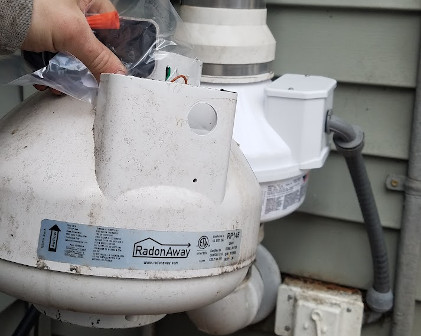
Radon
fan
Because radon continually rises from the earth, the vent fan runs constantly to
extract it. Observe the U-tube
at least quarterly.
Dead fans should usually be replaced with another of the same
model. A different model may be used on the advice of a qualified
professional.
A fan is just one part of a radon system. Proper design and
installation is needed to get good results. Only an accurate radon
measurement can prove its effectivness.
Typical electrical cost is well under $10/month. We can help you
calculate the consumption in terms of kilowatt-hours.
Fans that are wearing out tend to get louder or make
intermittent noises, but may still do their jobs. We can replace any
fan that eventually fails or becomes annoying.
|
 |
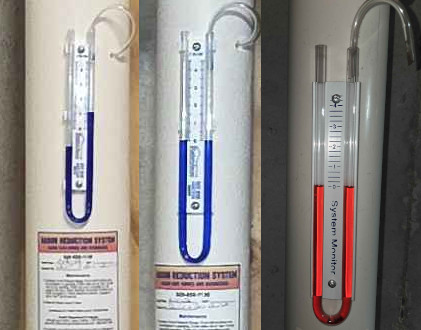
Checking this gauge is your most
important job as a radon system owner. It tells you if the fan
is running.
Displays pressure difference between each side of the tube - one
inside the pipe, the other in open air. Normally on the basement pipe.
On the left, U-tube shows the fan working well. There is a difference in pressure.
In the center, U-tube shows "0-0".
Sides equal. The fan is not running.
If you see "0-0", make
sure the flexible hose is connected between the U-tube and pipe. On the
right, our fan is running but the hose is disconnected.
Rarely, U-tubes get stuck and falsely indicate a pressure
difference. If you remove the flexible hose from the pipe, the two
sides should immediately equalize. If they don't, it's stuck. Easily
fixed by tapping it or very gently blowing into the hose until the
fluid moves.
On passive vent with no fan, there is usually no U-tube.
|
|
Power
A non-running fan could be dead, or it may be unpowered. Ensure
it's plugged in or its switch is turned on. Check any GFI devices or
breakers connected to the same circuit as the fan.
|
|
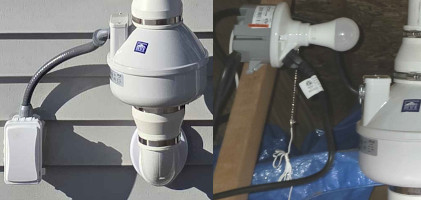
Rubber
couplers
The fan
and any radon pipe to a sump pit are connected with rubber couplers.
These are provided for service. The hose clamps are loosened or
tightened with a large flathead screwdriver or a 5/16" hex. Once
loosened, couplers can slide down the pipe.
The seal of a roof flashing or airtight sump lid may be compromised by
interacting with these couplers! Do not adjust them unless you have a
good reason. They offer quick access in case your sump pit is filling.
|
|
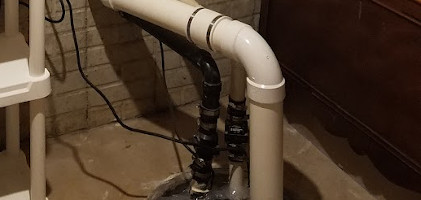
Sealed
sump lid
Sump
pits must
be airtight
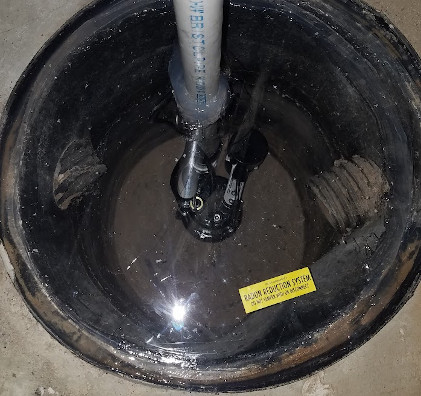
for radon systems to work properly, even systems that are not directly
connected to the sump pit.
Bolt-down gasket type lids are common. If needed, we custom make clear
plastic
lids cut to fit your existing sump system then seal the edges with
silicone sealant.
When the
seal is broken, it must be restored to airtight condition.
If a radon pipe goes into the sump pit, remove it first before
taking off the lid.
Silicone is easy to cut with a razor knife or flathead screwdriver.
Some of our lids are cut to flex around the pump pipe. There is no
danger of them breaking if you flex them. Others slide up the pump pipe.
|
|
Other
leaks in slab or foundation wall
Relevant leaks will be dealt with at the time of radon system
installation. In time, new leaks can appear by age, damage, or
modifications to the building.
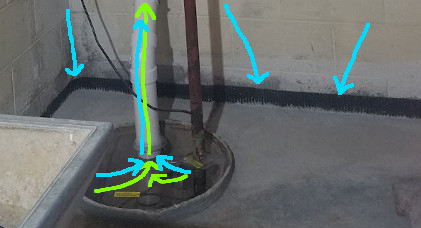
The joint between basement slab and foundation wall could
expand. New cracks could form in the slab or foundation wall. Backflow
valves in floor drains may get stuck open. New holes for plumbing, etc
must be patched up.
Interior perimeter drains can cause massive leaks. If you get one or
plan on getting one and you also have a radon system, please contact us.
|
|
Backdrafting
of combustion appliances
Not a concern with newer forced-air appliances.
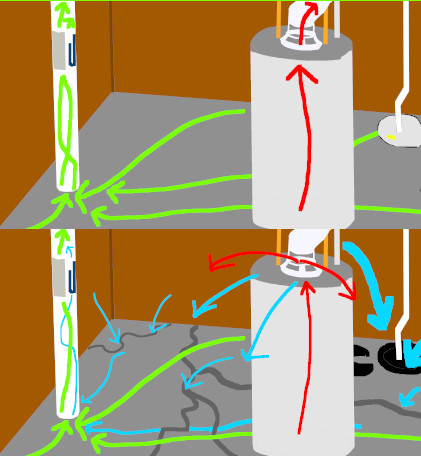
If a radon system causes strong enough draft, it may cause exhuast
gases from older naturally-vented appliances to backflow into the
building envelope rather than into the vent hood. This could result in carbon monoxide exposure.
If necessary, we test for backdrafting during installation. It
doesn't hurt to check every few years and to have a carbon monoxide
alarm installed near these appliances.
Top: Proper installation
Bottom: Poor performance and potential hazard due to leaks.
|
|
Ice
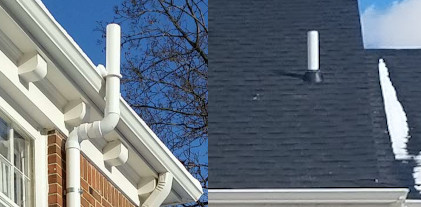
The air flowing through radon vents has high moisture content. On the
very coldest winter days, ice can form on the tip of the vent. Normally
this doesn't obstruct the vent and melts away as soon as it warms up.
If ice does obstruct the pipe for a long time, it can be removed. It's
best to turn off the fan and wait for it to stop spinning first. Ice
can be prevented from falling into the fan by removing the top of the
vent from the rubber coupler.
We're sometimes asked why our vents don't have rain caps or
critter guards. It's because ice forms on those so easily. In
Wisconsin, they'd cause much more trouble than they'd solve.
|
|
Fan
cleaning
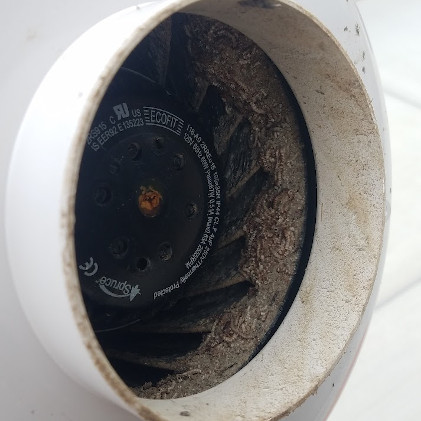
Most radon fans never need any cleaning, but the only way to tell if
one does is to inspect it physically. Some buildings have so many bugs
under the slab that they get sucked in and build up a layer of gunk on
the fan, which causes noisier operation and a shorter service life.
While the fan can work for a while in this condition, it really should
be cleaned.
We offer a regular cleaning service, but this is also something you
might do for yourself, especially with exterior systems. The fan is turned
off and disconnected from pipe for inspection or cleaning. |
|
|